
The Top Ten Ways Lacor Hospital Is Building A Cleaner, More Sustainable Future
JANUARY 26, 2026
THE TOP TEN WAYS LACOR HOSPITAL IS BUILDING A CLEANER, MORE SUSTAINABLE FUTURE
January 26 is the United Nations International Day of Clean Energy, a day to recognize how reliable, renewable power supports healthier communities around the world. Here are ten practical ways Lacor Hospital is building a cleaner, more sustainable future.
10. Protecting forests by growing its own fuel
Lacor manages 100 acres of eucalyptus trees, providing a renewable source of firewood for hospital needs and helping protect surrounding natural forests.
9. Improving waste recycling
Lacor recycles 550-650 pounds of glass per month, which is crushed and reused in concrete. Plastics are collected, sorted and donated to a local organization that repurposes them into sellable products. The hospital is also piloting a composting program for organic waste, which makes up 67% of total waste, helping reduce pollution that would otherwise come from open-air landfills.
8. Reducing pollution from medical waste
A modern waste treatment system allows much of Lacor’s medical waste to be sterilized without burning, reducing harmful emissions from incinerator use and avoiding an estimated 26 tons of CO₂.
7. Saving water and the energy needed to move it
Rainwater harvesting tanks store more than 250,000 liters of water, reducing energy used for pumping. Wastewater is treated on-site through ponds and wetlands before safely returning to the environment.
6. Matching energy use to solar power
By running energy-intensive equipment when solar electricity is being produced, Lacor reduces waste and relies less on grid and diesel power.
5. Using the sun to heat water
Solar water heaters provide 100% of sanitary hot water and 70% of laundry hot water, significantly reducing electricity use for daily hospital operations.
4. Less reliance on diesel during power outages
Power outages are common in northern Uganda, but solar energy and improved systems mean Lacor depends far less on diesel generators. This reduces costs, pollution, and noise while keeping hospital care running.
3. Lower energy costs mean more care for patients
Solar electricity helped Lacor save about 210 million Ugandan shillings (about $55,000) in electricity costs in a single year, freeing resources for medicines, staff, and patient care.
2. Solar power now supplies nearly one-third of the hospital’s electricity needs
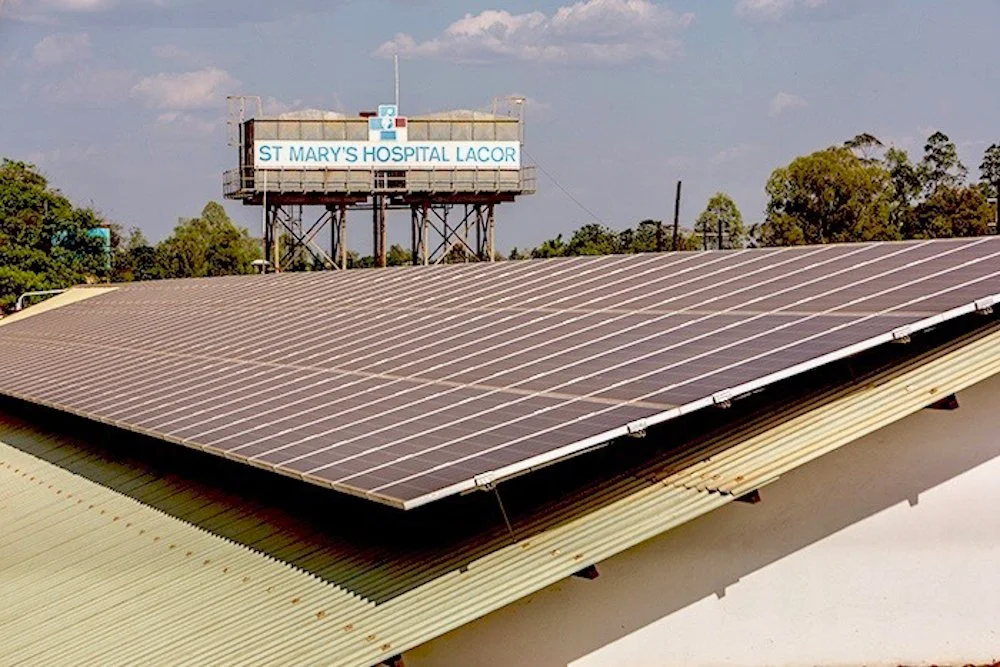
About 32% of Lacor’s total electricity comes from solar power. Solar panels on the rooftops help power wards, laboratories, operating theatres, and other essential services while strengthening energy independence and reducing reliance on fossil fuels.
1. Internationally recognized clean energy leadership
Lacor Hospital is the first energy user in Uganda to earn the internationally recognized EKOenergy ecolabel, confirming that its electricity comes from renewable, responsibly produced sources. This certification also contributes to funding renewable energy projects in the Global South, expanding Lacor’s impact outside its walls.